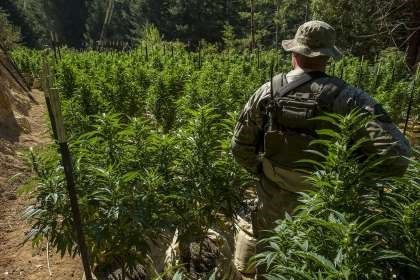
Marijuana policy within the U.S. military remains one of the clearest examples of the divide between federal law, state legalization, and military conduct standards. While cannabis laws have evolved rapidly across the United States, military personnel—regardless of rank, role, or location—are still bound by strict prohibitions that reflect federal law and Department of Defense (DoD) policy.
At the federal level, marijuana remains classified as a Schedule I controlled substance under the Controlled Substances Act. Because the U.S. military operates as a federal institution, this classification directly informs military regulations. As a result, the legalization of recreational or medical marijuana in individual states does not alter its status for service members. Uniformed personnel are subject to a zero-tolerance policy, even when stationed or on leave in states where cannabis is legal.
DoD policy is clear: the use, possession, distribution, or manufacture of marijuana is prohibited for all active-duty service members, reservists on active orders, and members of the National Guard when operating under federal authority. These rules are enforced through a combination of command oversight and routine drug testing. Urinalysis programs are mandatory, random, and conducted without advance notice, making detection a constant operational reality.
Enforcement actions can be severe. A positive drug test may result in administrative separation, loss of security clearance, nonjudicial punishment under Article 15 of the Uniform Code of Military Justice (UCMJ), or court-martial proceedings, depending on circumstances and command discretion. For officers and senior enlisted personnel, consequences often include immediate career termination due to the higher standards of conduct expected at leadership levels.
For special operations forces (SOF), the implications are even more significant. Special operators typically hold advanced security clearances, operate under heightened readiness standards, and are subject to additional scrutiny. Any drug-related violation can result in immediate removal from sensitive assignments, disqualification from elite units, and permanent damage to post-military employment prospects in defense, intelligence, or government contracting roles.
Importantly, the military’s prohibition extends beyond traditional marijuana products. Many service members are surprised to learn that certain cannabidiol (CBD) products are also banned. Despite CBD being federally legal under the 2018 Farm Bill, the DoD prohibits its use due to quality control concerns and the risk of THC contamination. This policy underscores the military’s emphasis on risk avoidance rather than intent.
Veterans, however, operate under a different framework. Once separated from service, individuals are no longer subject to the UCMJ or DoD conduct policies. Veterans may legally use marijuana in accordance with state law, though federal restrictions still apply in certain contexts, such as federal employment or firearms ownership. The Department of Veterans Affairs does not prescribe cannabis, but it does not deny benefits solely based on legal marijuana use.
As national attitudes and laws continue to evolve, pressure has mounted for the military to revisit its cannabis policies. To date, however, no formal changes have been adopted. The prevailing view within military leadership remains that marijuana use is incompatible with discipline, readiness, and force reliability.
Until federal law changes or the DoD issues new guidance, marijuana remains unequivocally prohibited for U.S. military personnel. Understanding this policy—and its consequences—is essential for service members at every level, particularly those serving in high-risk, high-trust operational roles.